Highlights from CHASE 2025 and ICSE 2025: the Ottawa Experience

ICSE 2025 and co-located CHASE 2025, held at Ottawa, were full of energy, excellent research, meaningful conversations about the present and future of Software Engineering, and catching up with old and meeting new friends. Below I recall key highlights from the experience across the week, including some reflections on how we can improve even more as a community.

Sunday-Monday: CHASE 2025

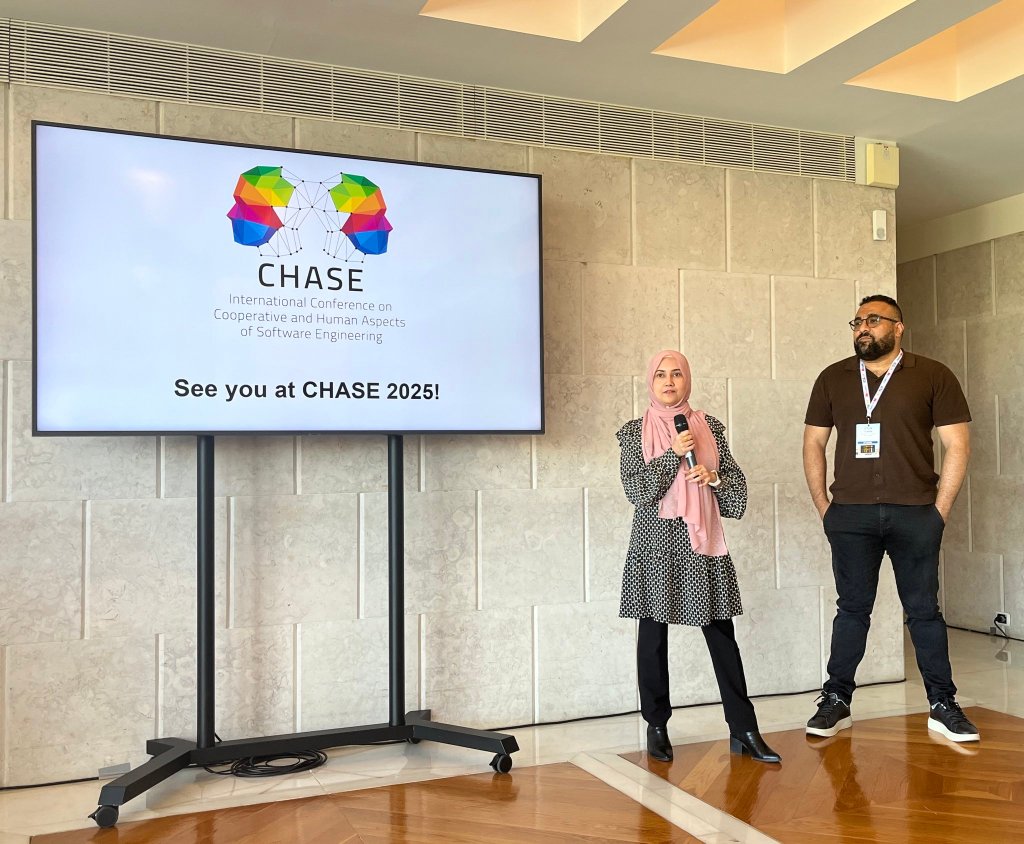
From being a first time PhD student at CHASE 2010 when it used to be a workshop to serving as the Program Co-Chair in 2021 with Fabian Fagerholm and now as General Chair for CHASE 2025 as a co-located conference at ICSE, it has been a special journey of 15 years! After over an year of planning and organising, it was a pleasure to see the CHASE 2025 conference come alive at ICSE 2025. Together with Program Co-chairs Ronnie De Souza Santos and Bianca Trinkenreich and the entire OC team, we enjoyed:

  • hosting two days of excellent human and socio-technical aspects research in software engineering
  • celebrating distinguished award paper and reviewers
  • listening to two excellent keynotes by Alexander Serebrenik (Sunday) and Margaret-Anne Storey (Monday)
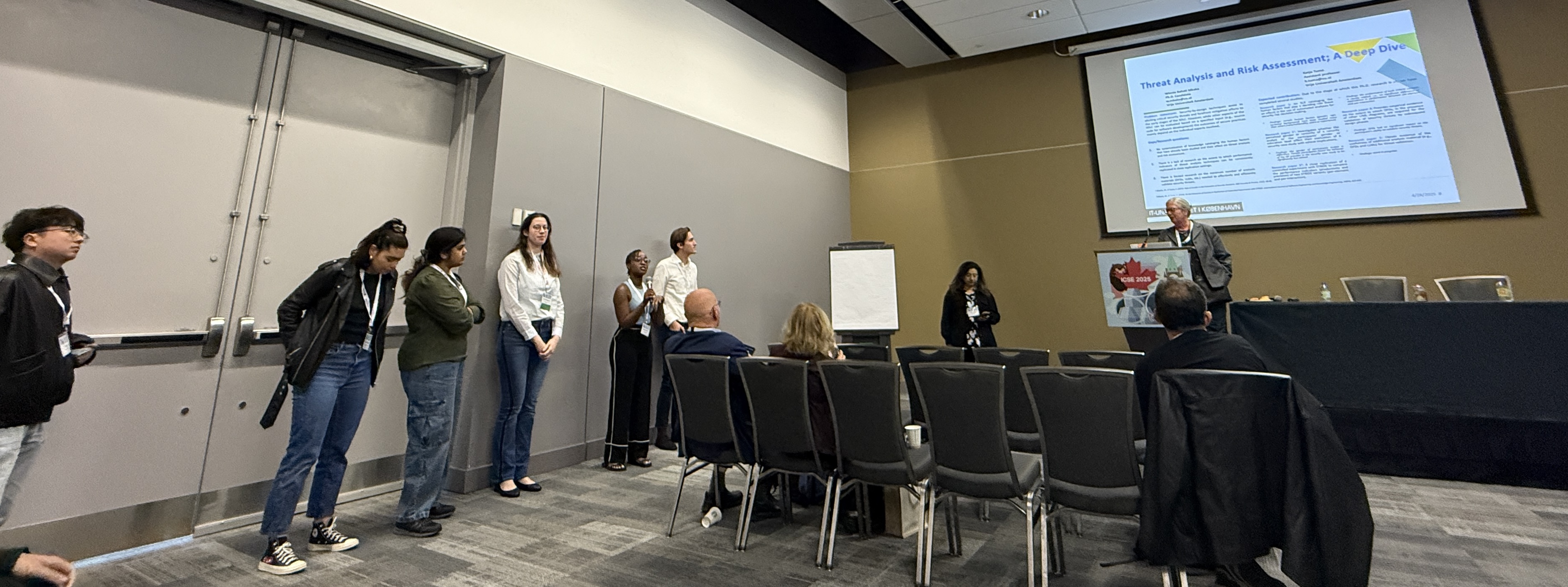
  • watching the next generation of CHASErs flourish in the Doctoral and Early Career Symposium (DECS) organised by Yvonne Dittrich and Irum Rauf (see DECS “madness” presentations queue photo)
  • launching my book “Qualitative Research with Socio-Technical Grounded Theory” at CHASE – such a special experience!
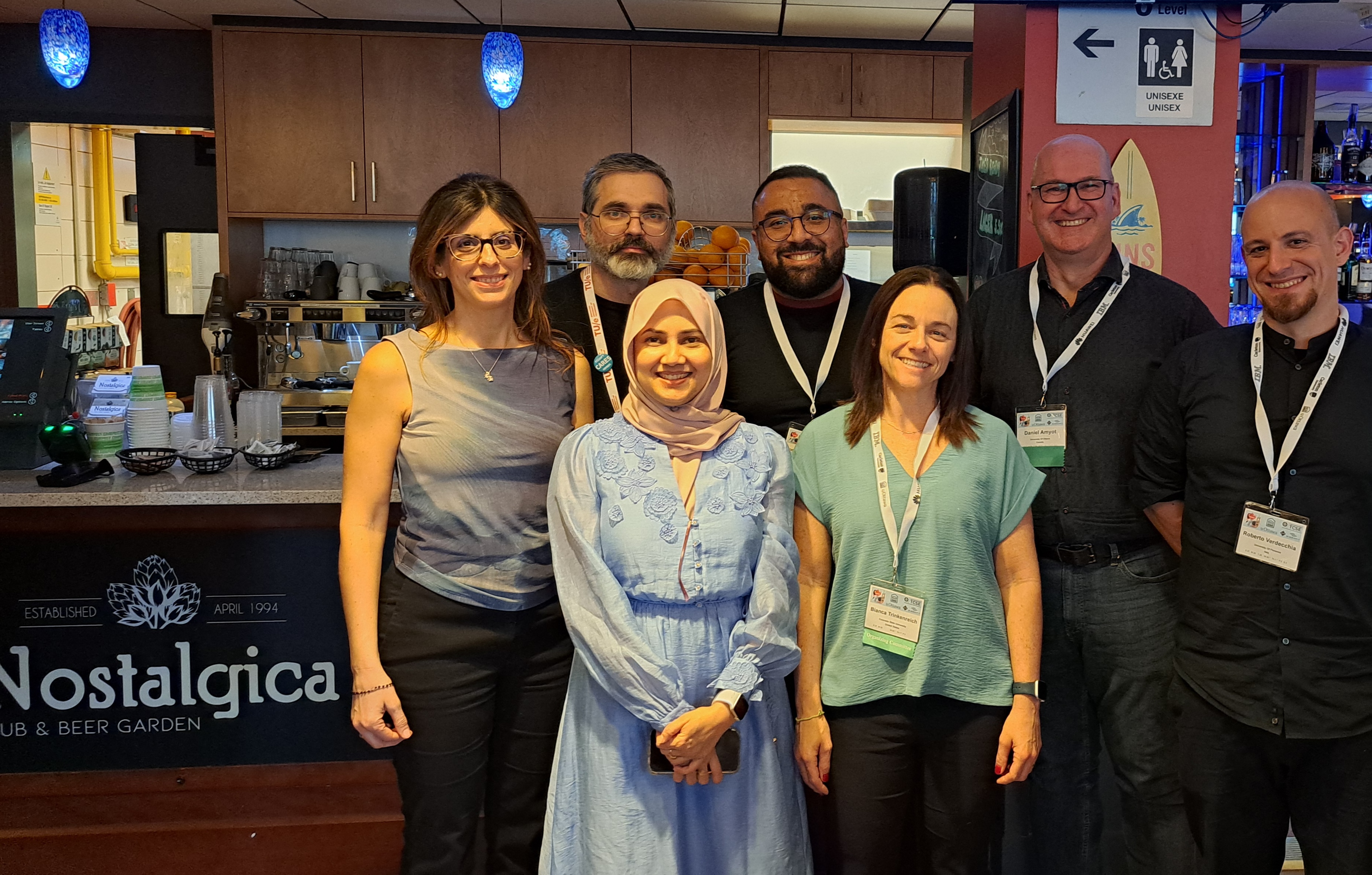
  • hosting joint dinner evening with our friends from the #TechDebt2025 conference at Nostalgica Cafe.

Special thanks to Lavinia Paganini for capturing the moments on camera and sharing them on socials, and to our organising committee, program committee, and attendees.

ICSE and CHASE are where I have found my tribe – hope all our attendees did too. Thank you for making it a meaningful experience for everyone, and look forward to CHASE 2026 at ICSE 2026 in Rio!

Tuesday: Doctoral Symposium, EDI Panel, RAIE talk, ICSE Steering Committee
  • Listening to and providing feedback to PhDs is something I always look forward to! It was great to hear about the works of four PhD students working on the human aspects of SE at the Doctoral Symposium, followed by asking them questions and providing feedback on their research topics and designs. Thanks Alexander Serebrenik and Tayana Conte for the invitation!
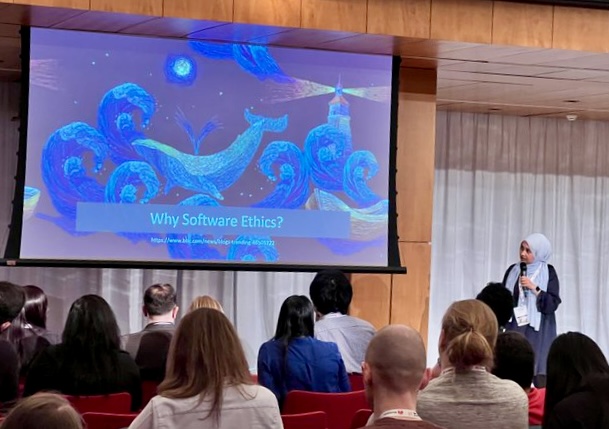
  • I presented our experience report “Raising AI Ethics Awareness” on behalf of the team – Dr Aastha Pant and Dr Paul McIntosh – at the RAIE workshop, highlighting the importance of raising AI ethics awareness amongst practitioners using engaging approaches such as quizzes and discussions.
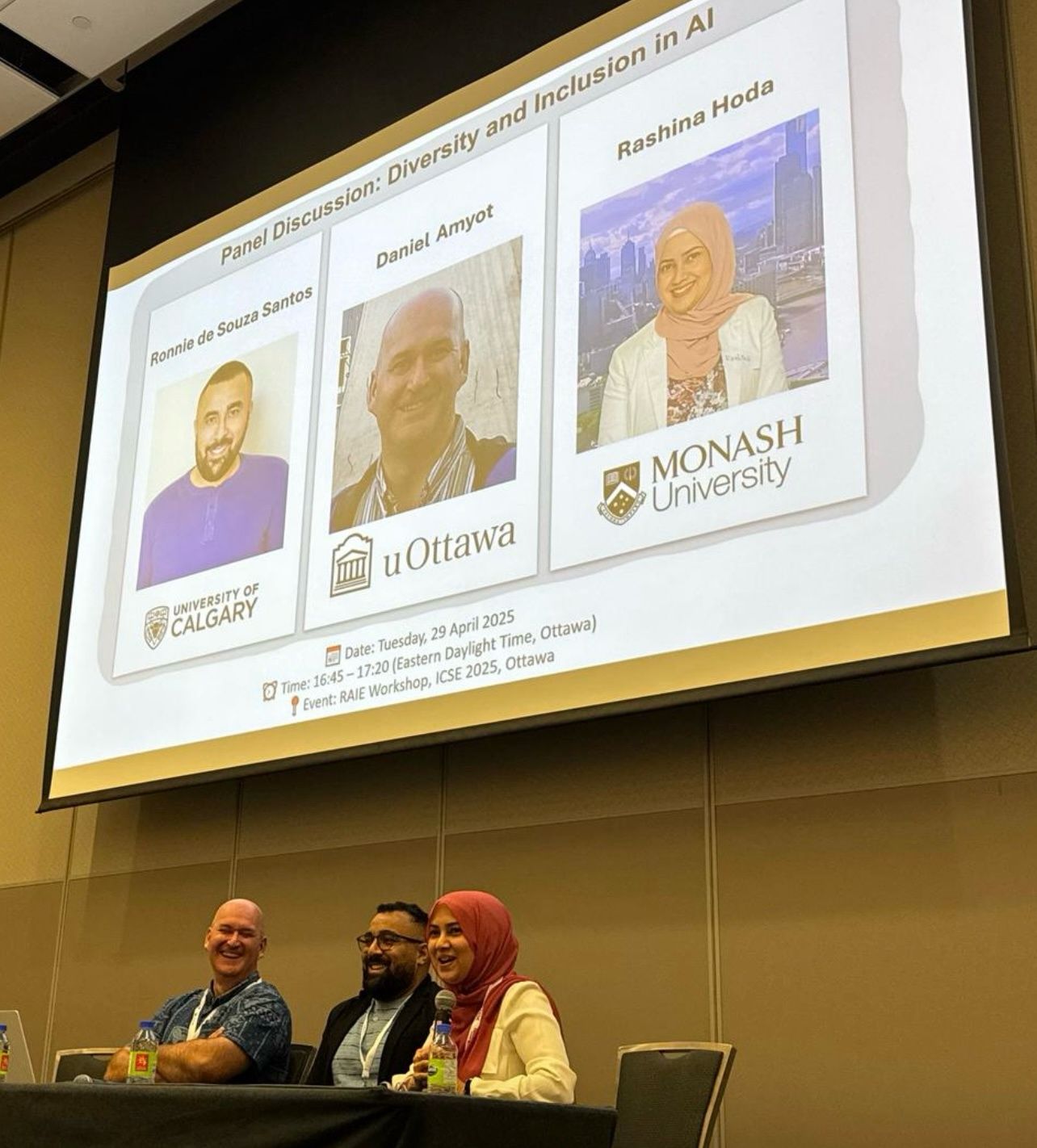
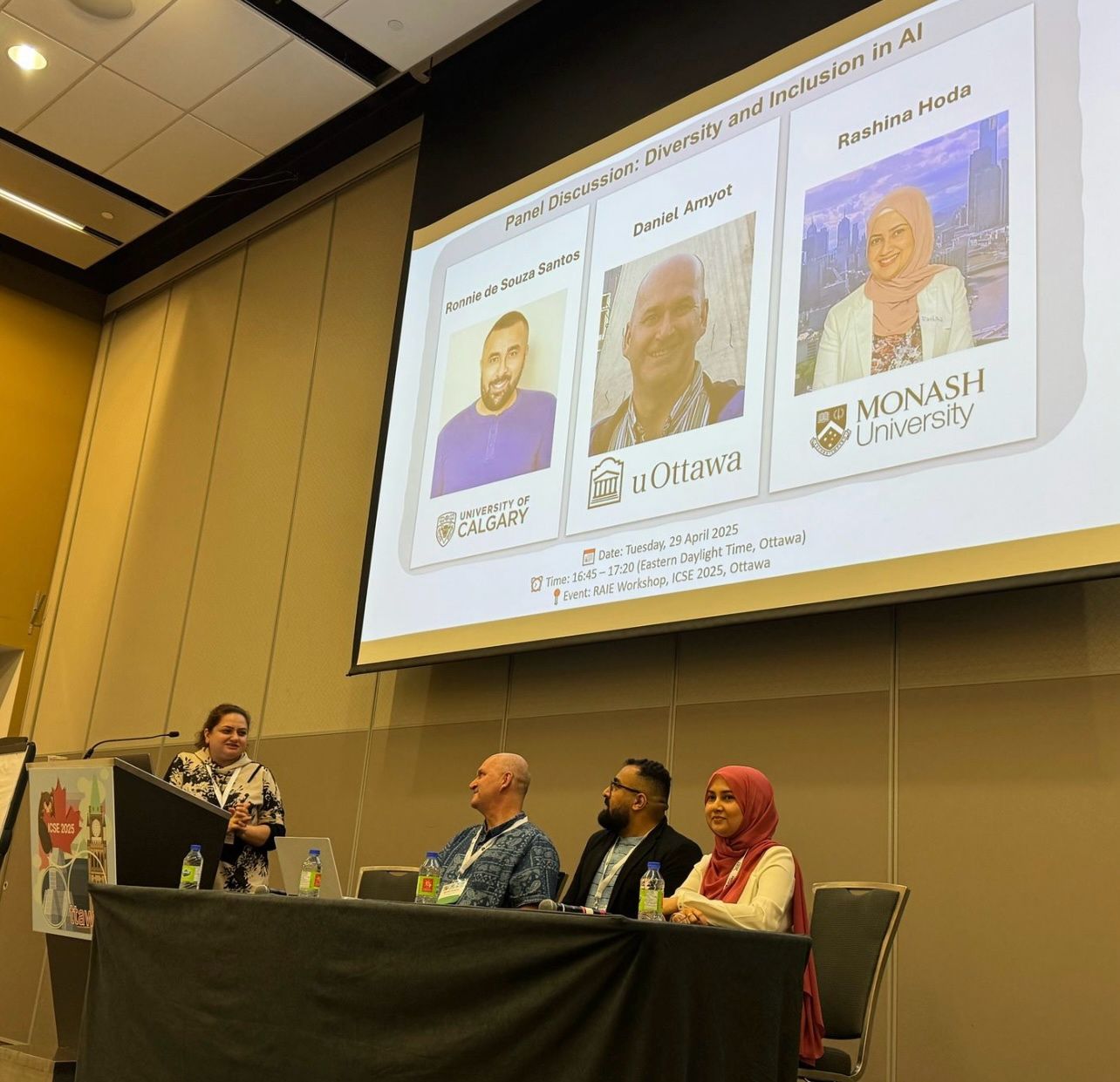
  • We engaged in some hard hitting conversation on EDI at the “EDI in AI” Panel at the Responsible AI Engineering (RAIE) workshop at ICSE, organised by colleagues from CSIRO, Australia. It was a pleasure to share the stage with Daniel Amyot and Ronnie De Souza Santos to answer the questions posed by the host Muneera Bano and the audience. My key takeaway: acknowledge the challenges and move forward with proactive action!
  • I attended my first ICSE steering committee meeting over a working dinner. It lasted ~4.5 hours 🙂 We discussed key matters affecting the community such as sustainability and plans for ICSE 2026 (Rio), 2027 (Ireland), 2028 (Hawaii), and a pitch for 2029.

Wednesday: David Parnas Keynote, two Tech Briefings, ICSE2026 OC Lunch meeting
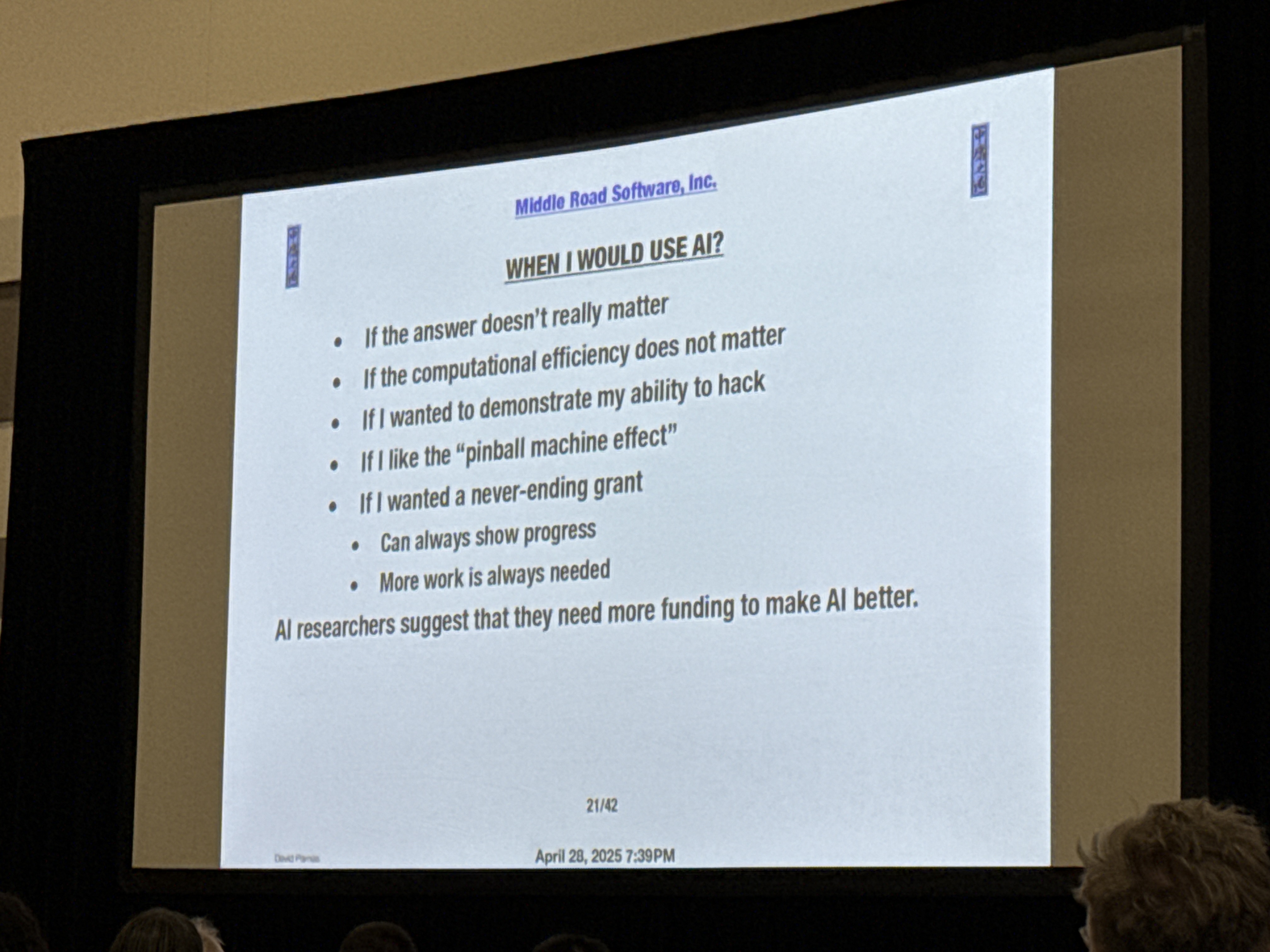
  • Most keynotes make you think. Some make you think again and again. David Parnas challenged how we define, consider, implement and research AI as the SE community. Slide deck available here. Videos of all keynotes are available on the ICSE YouTube channel.
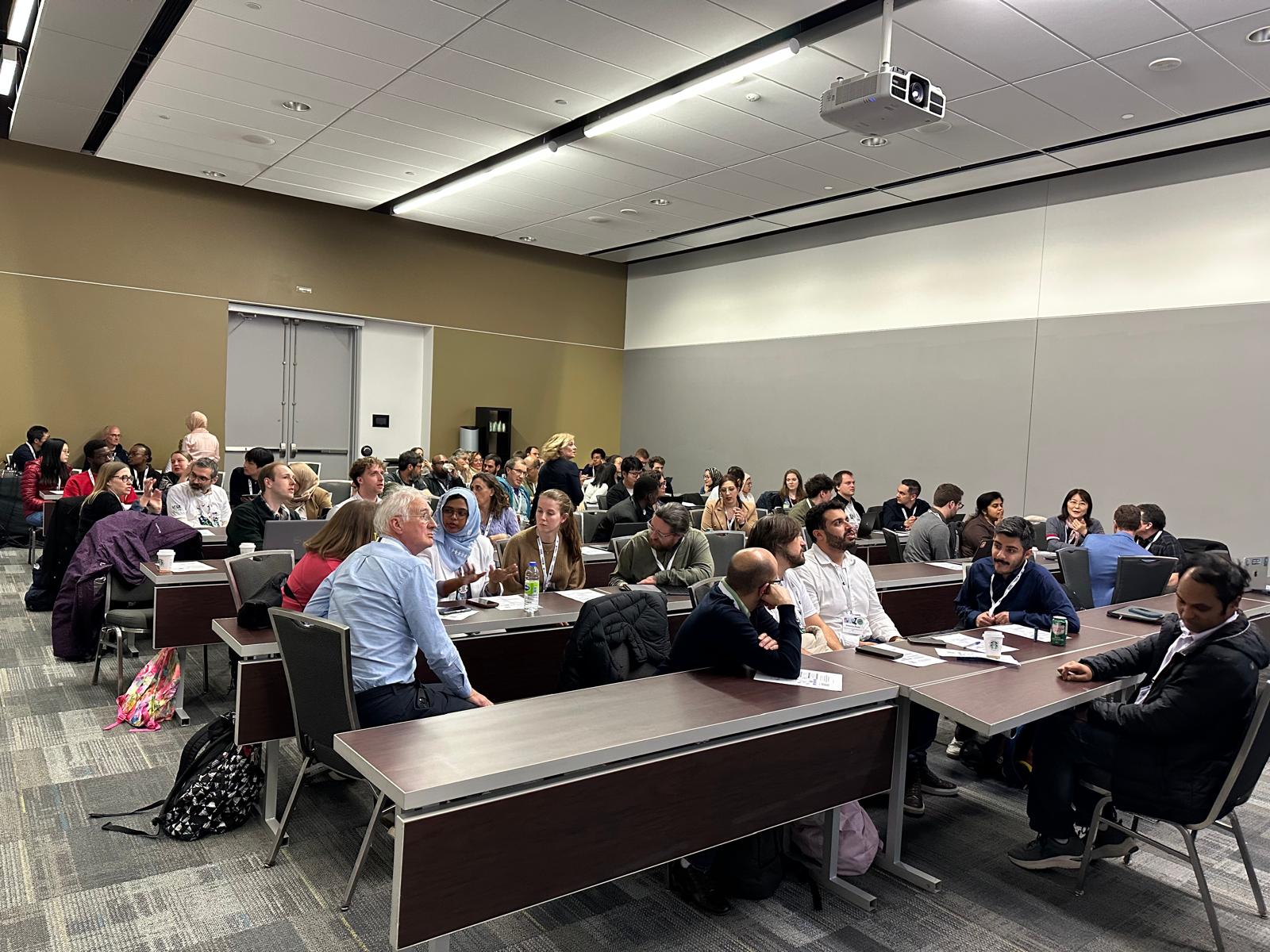
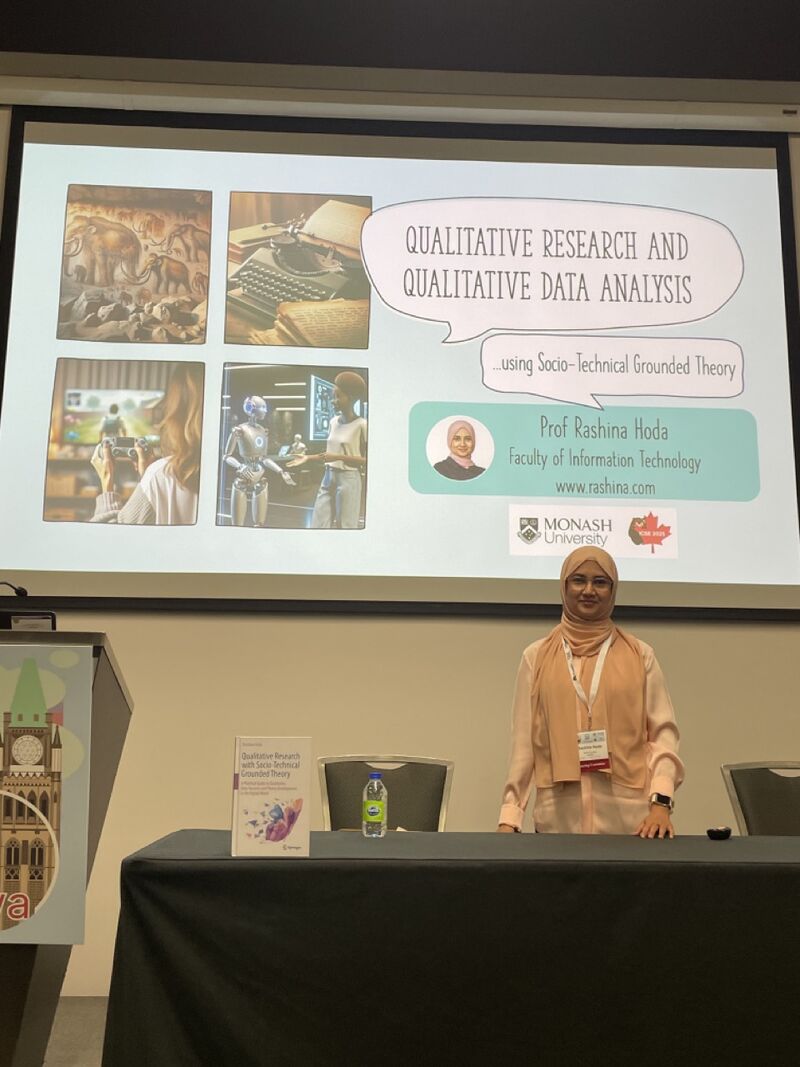
  • Presenting the 90 mins technical briefing on “Qualitative Research and Qualitative Data Analysis” was fun, with an engaged audience of 50+ folks (all new except one person who had attended a TB I gave at a previous ICSE). I also gave out a free copy of my book as promised through the giveaway at the TB. The copy went to Karina Kohl from Universidade Federal do Rio Grande do Sul, Brazil.
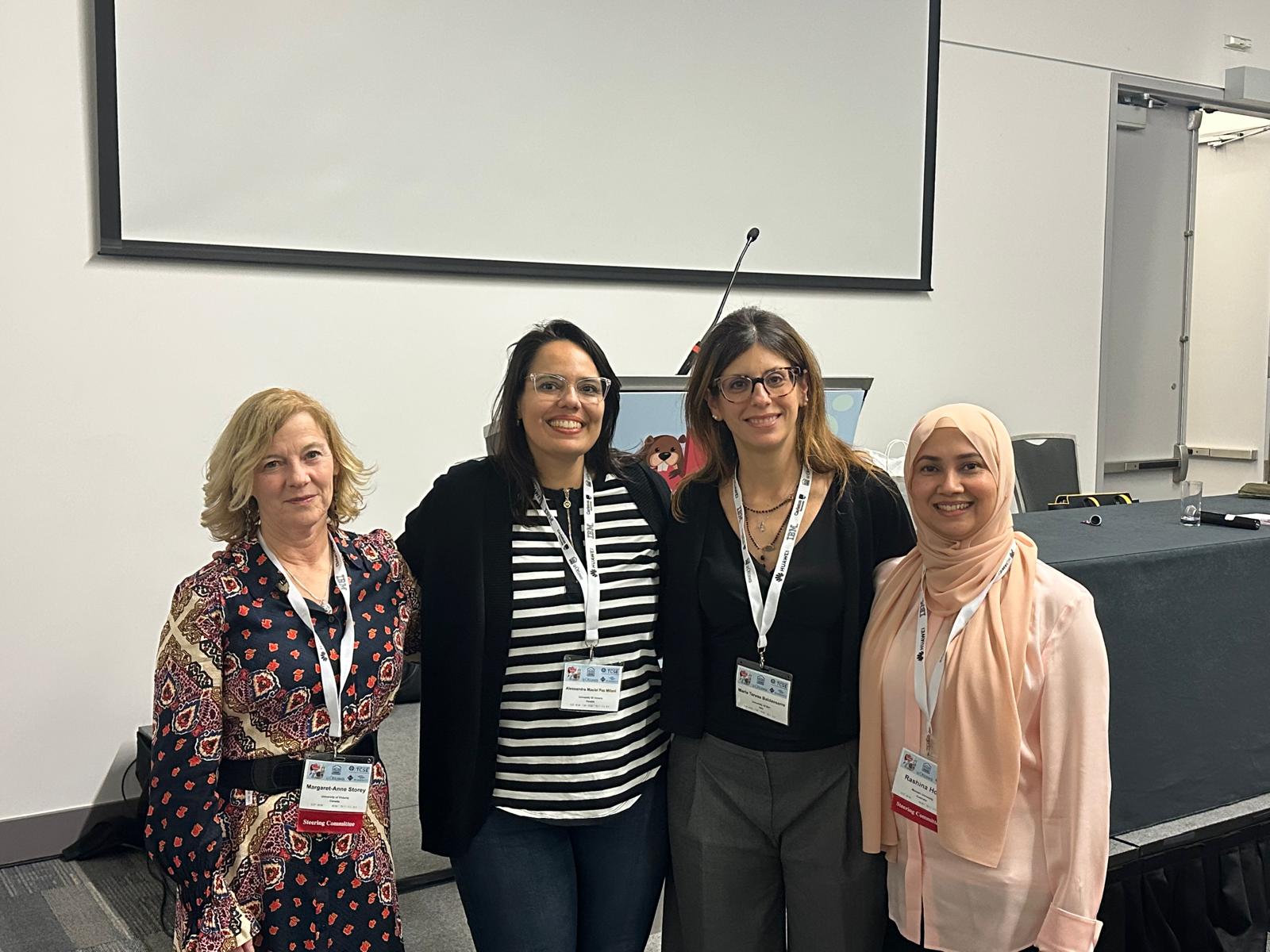
  • Co-presenting a second 90 mins technical briefing on “Mixed methods research” with Margaret-Anne Storey, Teresa Baldassarre, and Alessandra Milani was special. After working on this mind bending exercise to define and discuss MMR for the SE community together for over 2.5 years, it was truly special to present the TB together. We had a packed house of over 60+ folks in the audience, actively engaged in the content and discussions. The MMR paper is available on arxiv and accepted to Empirical Software Engineering journal.
  • In between the two TBs, I attended the ICSE 2026 Organising Committee lunch meeting. ICSE 2026 will be in Rio, Brazil for the first time . I am so excited to be co-chairing the Software Engineering in Practice (SEIP) track with Gustavo Pinto. Call for papers will be released soon!

Thursday: ICSE 2027 OC brekkie meeting, Human Aspects, TSE Editorial Board, Future of SE panel, ICSE Town Hall, Banquet

  • ICSE2027 will be held in Dublin, Ireland. It was lovely to share the breakfast organised for the organising committee by the Co-Chairs Brian Fitzgerald and Liliana Pasquale. Together, the OC discussed logistics, tracks, publications, local arrangements, and much more. I will serving as the EDI co-chair along with Anthony Ventresque.
  • At the IEEE Transactions on Software Engineering (TSE) editorial board meeting over lunch, we discussed key items such as defining significance, improving the review experience, sharing our challenges and strategies of working at Associate Editors for the TSE.
  • The Future of SE panel bought up the good, bad, and ugly of what’s next to come.
  • The ICSE Town Hall saw many topics of concern to the community being discussed including possible ways to connect the three key conferences ICSE, FSE, and ASE better, offering authors more flexibility in what to attend.
  • The First Nations dance at the Banquet was a treat! It is heart warming to see Indigenous peoples being respected and celebrated around the world, whether its in Canada, Australia, or New Zealand. Featured in the photo is a traditional ‘rain dance’ experience at the ICSE Banquet.

Friday: 50yrs of ICSE, Human Aspects, Sustainability keynote, SEIP Tips, EDI Talk at SEIS, Goodbyes
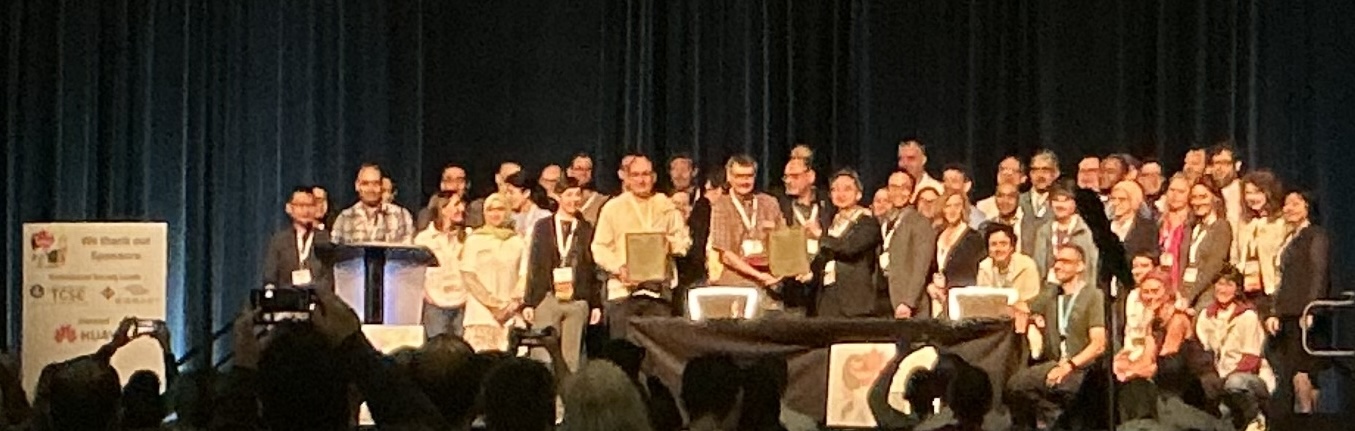
  • The day started with celebrating 50 years of ICSE where current and previous 5 years’ OC members (who were there) joined up on stage to mark this occasion.
  • The ICSE Keynote on Sustainability by Patricia Lago was a delight to soak into! Patricia specially called out the need for more human aspects research into the area of software sustainability.
  • Huge thanks to Ciera Jaspan and Rick Kazman for sharing their experiences of co-chairing the SEIP track at ICSE2025 – I learned a lot and hope to make the track a success at ICSE2026 with my co-chair Gustavo Pinto.
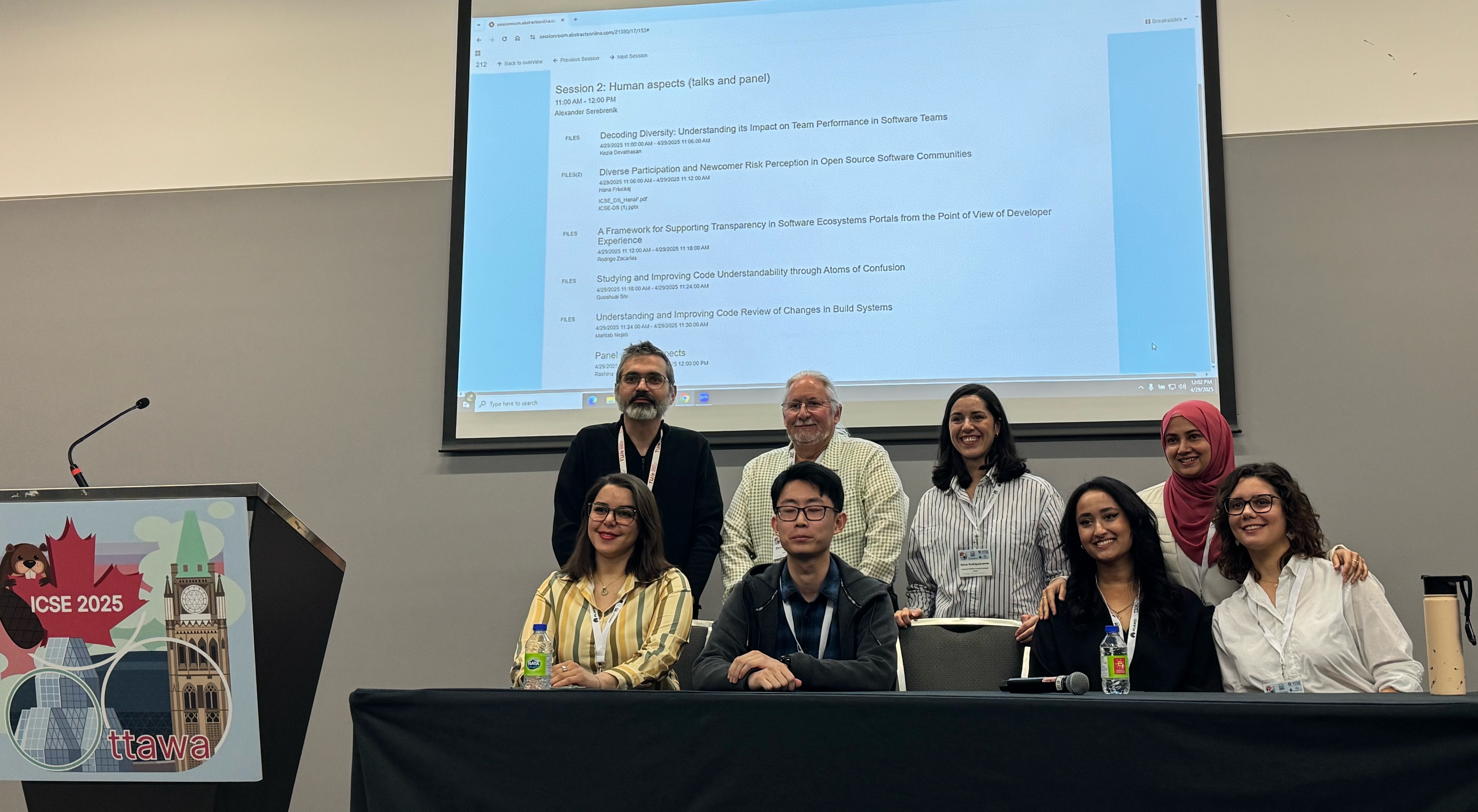
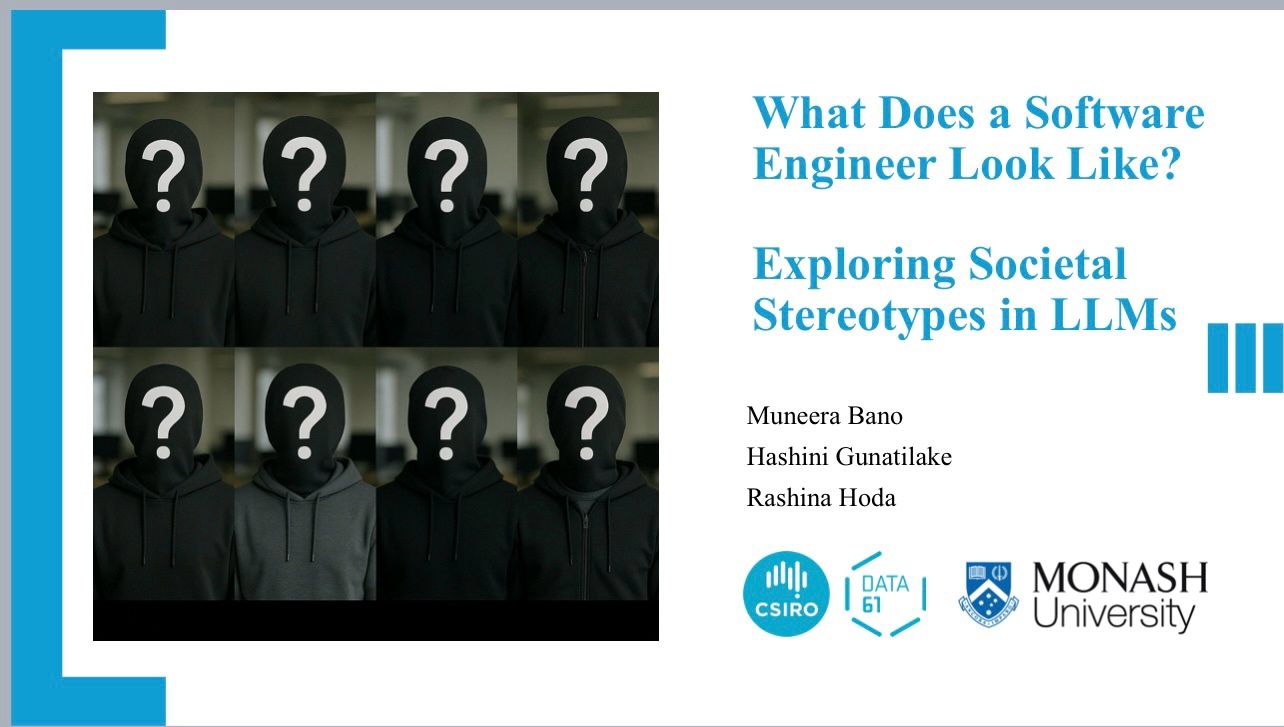
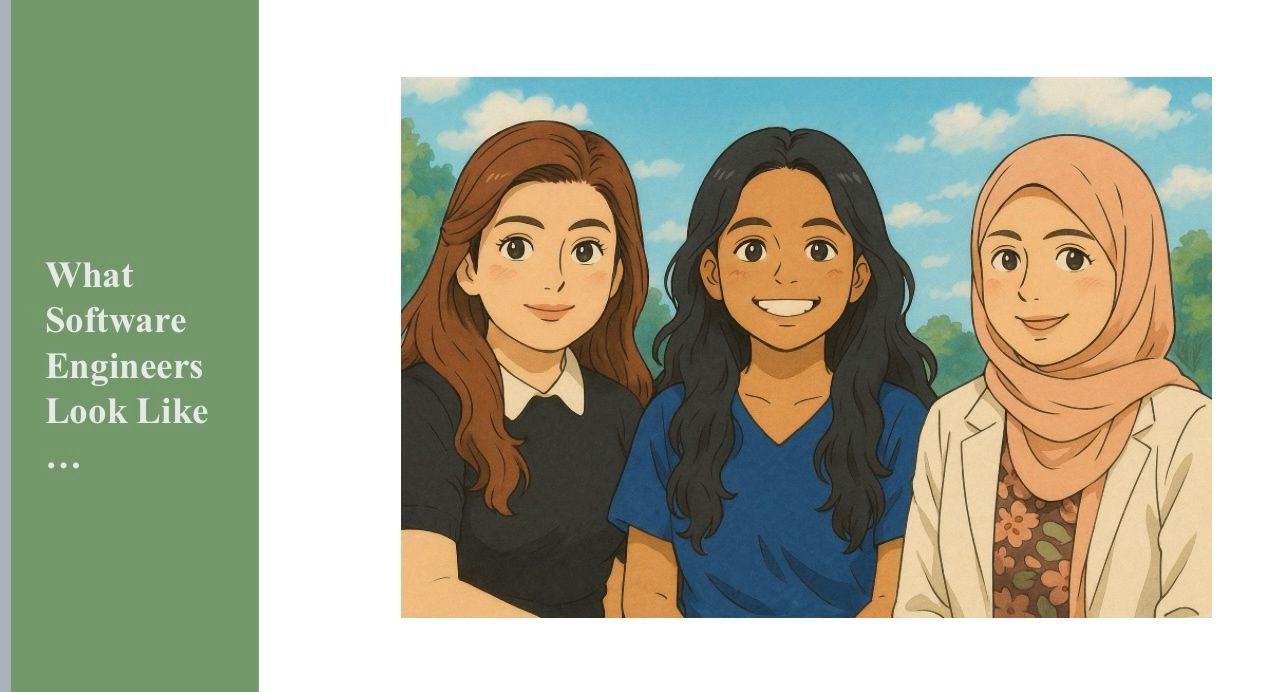
  • Muneera and I presented our paper “What does a Software Engineer look like: Societal Biases in LLMs” in the SE in Society (SEIS) track of ICSE. It was such fun conceptualising, conducting, and writing up this work with Muneera and Hashini Gunatilake (HumaniSE lab, Monash University). Great audience engagement and questions, even though it was one of the last slots in the program. This research was supported by Monash Information Technology‘s #EDI portfolio.
  • Current and ex- folks from the Faculty of IT at Monash University met up at ICSE. We managed to get a picture of some of us 🙂
  • Finally, it was time to say goodbyes to colleagues, students, and friends – old and new – as we all look forward to the next ICSE and CHASE 2026 in Rio!

Inclusion at ICSE

Whether it was inclusive food options (veg, vegan, halal, gluten free etc), on-site childcare, dedicated prayer room and quiet room, or the conscious efforts to promoting sustainability, ICSE 2025 excelled in inclusive and responsible practices. Something future ICSE’s will have to work hard to maintain as a standard!

What we can do better

While our community has an overwhelmingly positive culture, I can think of three areas of improvement:

  • We should be very careful in the delivery of our feedback. Especially as experienced members of the community, it is our responsibility to build up the next generation. While we do not want to all wear rose-tinted glasses and squash any criticism, how and where feedback is provided can be given more thought. For example, some conversations can be taken offline over tea/coffee and feedback can be provided in more constructive ways. It costs us nothing to share a good word of encouragement but it can go a long way in shaping people’s experience of the community and boosting their confidence in their own abilities. Reminds me of the saying, “in a world where you can be anything, be kind.”
  • We should consciously avoid giving into casual ageism (and other ‘isms’ for that matter). Every ‘young’ looking person (especially woman) is not a student. I have learned to avoid making such assumptions over the years. Don’t assume, ask politely what people do, what excites them, what’s the next cool thing they are working on. If they ‘look’ young for their role, ask them about their journey and be happy for them knowing they must have worked really hard to get there.
  • Finally, more diversity on the main panels on the program, both in terms of gender and geographic location (e.g., beyond the USA), would be great to see the future!
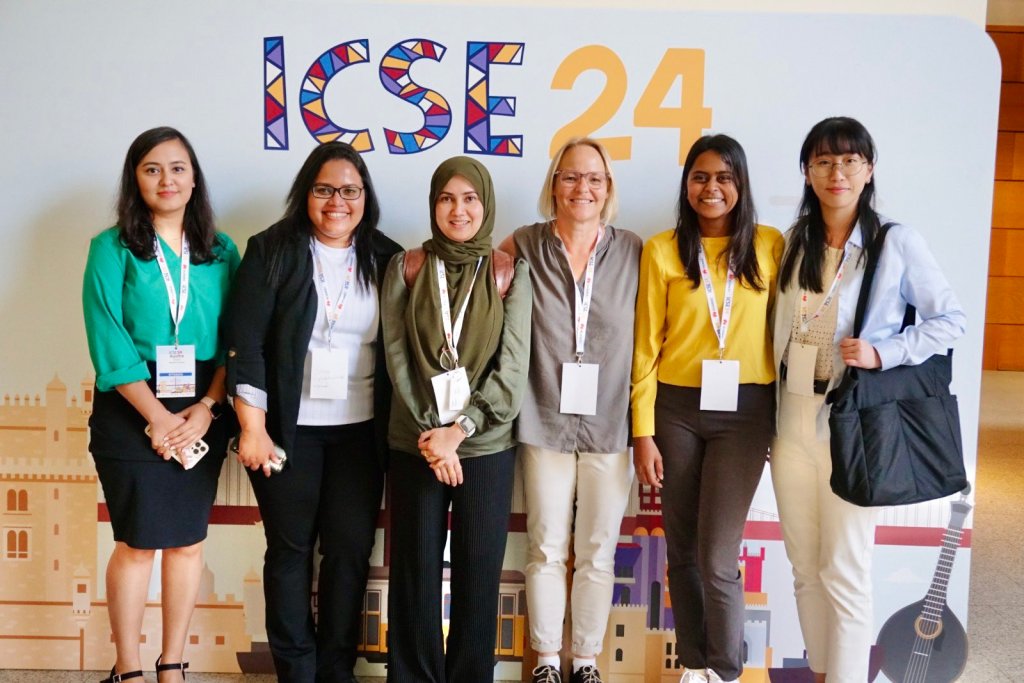
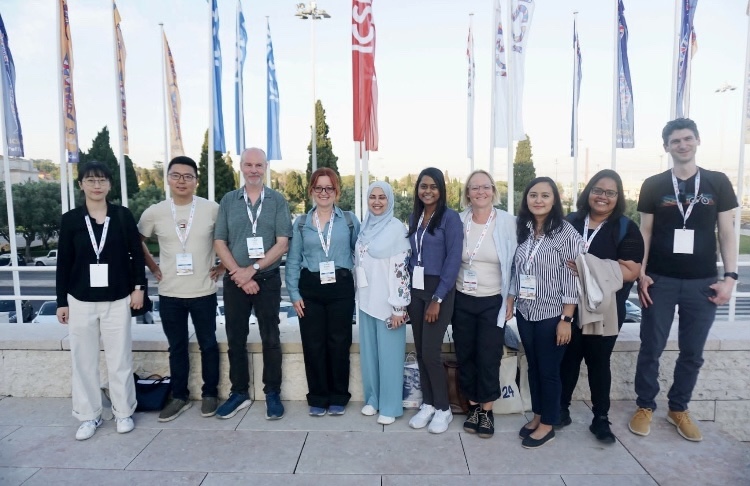
Jam packed, energising, and meaningful – loved the ICSE 2024 and CHASE 2024 experience at Lisbon, Portugal!

Top highlights:

🔸 My four co-supervised PhD students presenting their papers at Cooperative and Human Aspects of Software Engineering (CHASE) and the International Conference on SE (ICSE) – confident ladies rocking it on the world stage! 🚀 

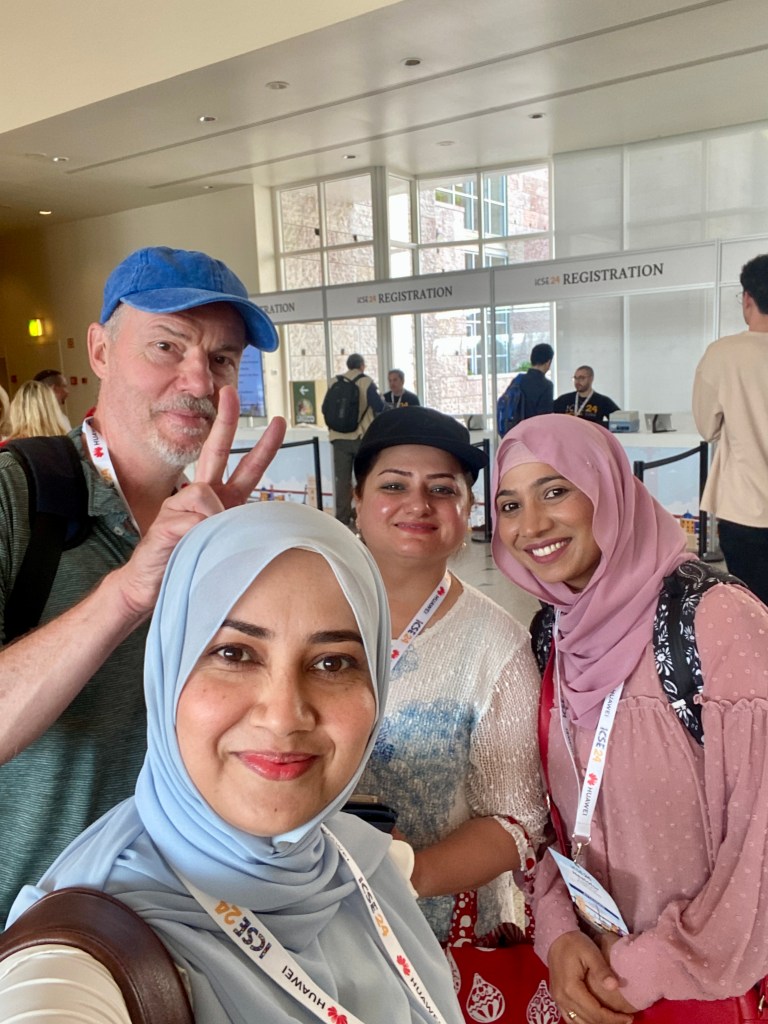
🔸 Catching up with old and new colleagues and students from around the world 🌍 

🔸 A full house at my Technical Briefing on Qualitative Data Analysis with Socio-Technical Grounded Theory (STGT) – great questions and engagement – thank you to all the 40+ participants 🙏

🔸 Catching up with my book editor Ralf Gerstner (Springer) in person after 6 years and discussing launch plans. The book “Qualitative Research with Socio-Technical Grounded Theory” is available for pre-order on Amazon now! Book cover is receiving final touches 📖 ✏️ Watch this space 👀 

🔸 Prof Margaret-Anne Storey (Peggy) presenting on our collaborative work on the “Guildeines for Using Mixed and Multi-Methods Research in Software Engineering at Mining Software Repositories conference (co-located with ICSE) 😀 Collaborators include Peggy, myself, Alessandra Milani, and Maria Teresa Baladassarre

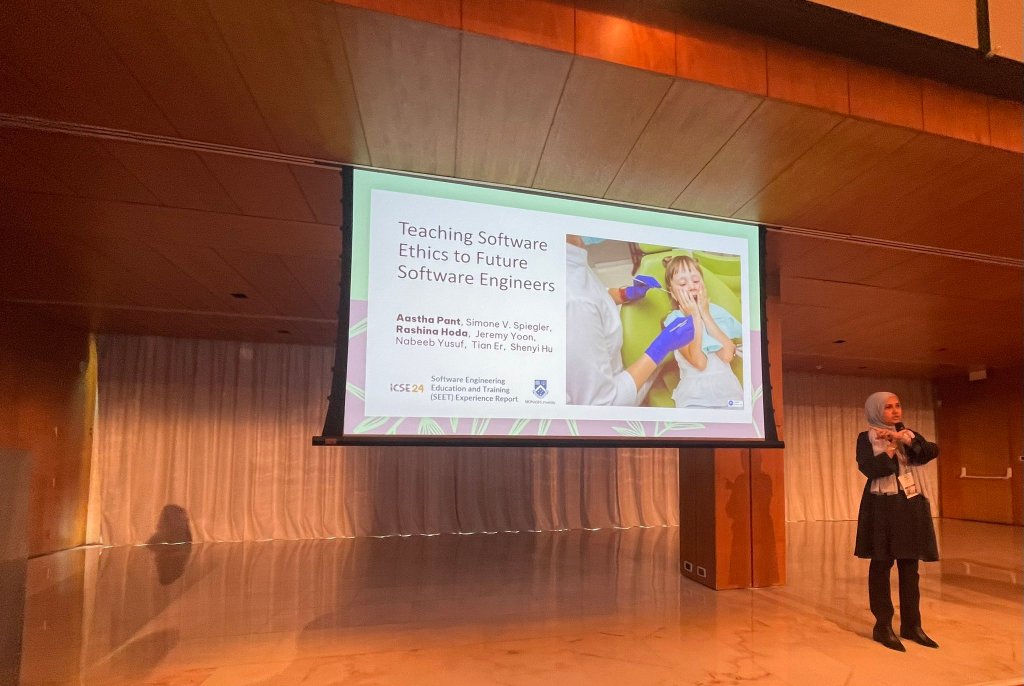
🔸 Co-presenting on Teaching Software Ethics to Future Software Engineers in the SE in Education and Training (SEET) track with Aastha Pant. 👩🏻 🧕🏼 Co-authored with Simone Spiegler, Rashina Hoda, Jeremy Yoon, Nabeeb Yusuf, Tian Er, and Shenyi Hu

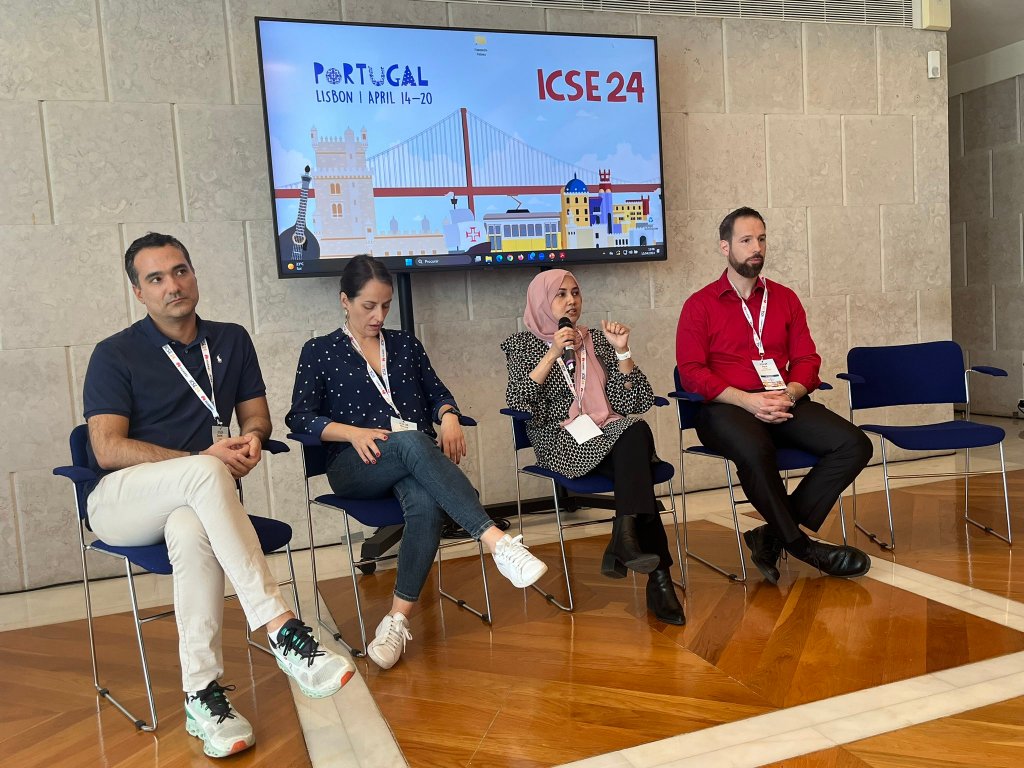
🔸 Discussing the Future of CHASE in the age of AI as part of a panel at CHASE2024. 🤖 👵🏻 

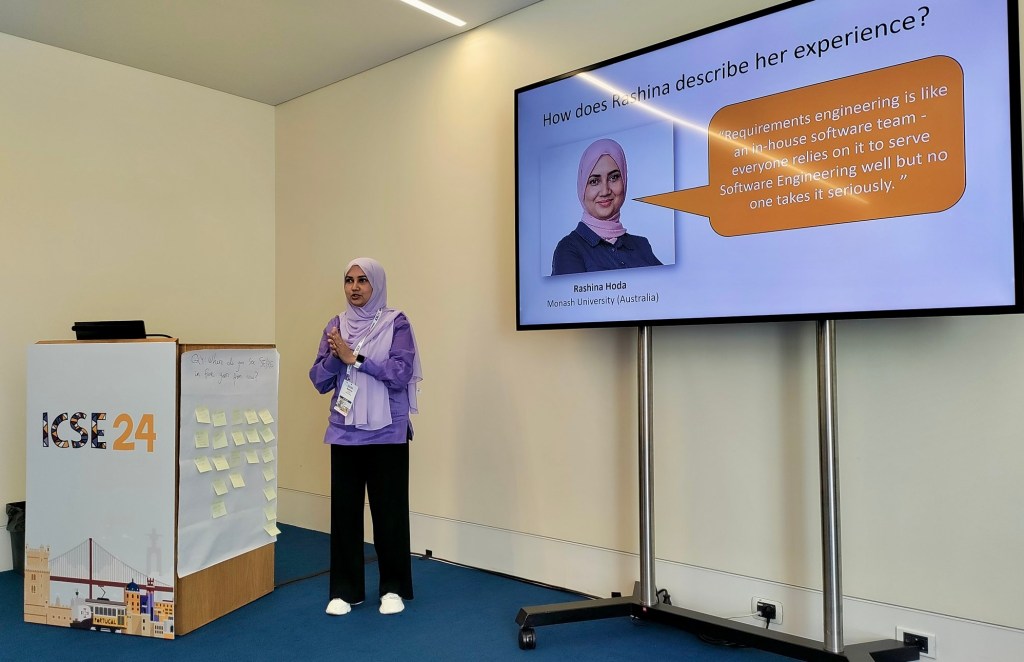
🔸 Presenting my invited reflections (and rants 😅) at the MO2RE workshop – lovely to engage with the Requirements Engineering (RE) community, thanks for the invite.

🔸 Presenting a Keynote on Augmented Agile at FinanSE workshop – an area which fills a critical gap in the ICSE program. Thank you for inviting me. 🎤 

🔸 Presenting a Journal First talk on “Responding to change over time – a Longitudinal Study on changes in Coordination Mechanisms in Large-scale Agile” – another great collaboration with Marthe Berntzen, Nils Brede Moe, and Viktoria Gulliksen Stray (Uni Norway and SINTEF) 🇳🇴 🇦🇺 

Super blessed to be able to travel again and experience the international SE community.

Looking forward to organising CHASE2025 as General Chair, with Ronnie and Bianca as PC Chairs and ICSE2025 in Ottawa! 

#SoftwareEngineering #Ethics #ArtificialIntelligence #book #icse2024 #chase2024

Pandemic Programming Survey Information

Pandemic Programming: Investigating how working from home during COVID-19 is affecting software professionals.

To participate in the survey, click here.

You are invited to take part in a research study being conducted by Dr. Rashina Hoda, an Associate Professor at Monash University, Melbourne, Australia, Dr. D. Paul Ralph, an Associate Professor in the Faculty of Computer Science at Dalhousie University, Halifax, NS, Canada, and Dr. Sebastian Baltes, a Lecturer at the School of Computer Science at the University of Adelaide, Adelaide, SA, Australia.

The purpose of this research is to explore how working from home during COVID-19 is affecting the wellbeing and productivity of software professionals. We will write up the results of this research to publish in a peer-reviewed academic journal or conference.

As a participant in the research you will be asked to answer questions about your wellbeing, productivity and various factors that may affect them in an online survey using Google Forms. It will take approximately 20 minutes to complete this survey.

Once data collection is complete, responses will be downloaded and erased from Google’s servers. The data will be saved and encrypted in Dalhousie’s secure cloud storage. The data will be analyzed using Microsoft Excel, SPSS, and SmartPLS (https://www.smartpls.com/) using the researchers’ password protected computers.

Your participation in this research is entirely your choice. You do not have to answer questions that you do not want to answer, and you are welcome to stop the survey at any time if you no longer want to participate. All you need to do is close your browser. However, if you do complete your survey and later change your mind, we will not be able to remove the information you provided because the surveys are completed anonymously, so we would not know which response is yours.

Information that you provide to us will be collected anonymously. The survey does not ask for your name or any other information that could be used to identify you. The researchers named above will have access to the survey results, which are completely anonymous.

We will describe and share general findings in presentations and scientific journals. We will not share quotations from open-ended questions. If and only if we are satisfied that it is virtually impossible to de-anonymize any of the records in the dataset, we will publish the anonymous dataset in a scientific data repository. Publishing datasets helps scientists reproduce research, which helps improve our knowledge of the world. However, if we can think of any way that someone might be able to link some of the data back to an individual person, we will not publish the dataset and will delete it after five years (on May 1, 2025).

The risks associated with this study are no greater than those you encounter in your everyday life.

There will be no direct benefit to you in participating in this research. However, if we receive at least 130 responses, we will donate $500 to an open source project. If you choose to participate, you will get a chance to vote for your favorite project at the end of the survey. Moreover, the research may produce recommendations for how companies can better support employees like you during this crisis, and your company may choose to implement some of these recommendations.

If you have any questions about this project and survey, please feel free to contact us at rashina.hoda@monash.edu, paulralph@dal.ca or sebastian.baltes@adelaide.edu.au. We will be happy to answer any questions you may have.

If you have any ethical concerns about your participation in this research, you may contact Research Ethics, Dalhousie University at (902) 494-1462, or email ethics@dal.ca (and reference REB file # 2020-5116).”

Project-based courses Survey

group of people having a meeting

We are conducting a survey on project-based courses in the areas of software engineering and computer science. If you offer a project-based course in your institution, please participate in the survey on https://www1.in.tum.de/survey/index.php/186991?token=linkedin to help us to better understand how educators design their project-based courses. The projects could use agile or traditional or other software development processes.

The survey only takes 10-15 minutes. Thank you!

Research Team
Stephan Krusche, TU München, Germany
Swapneel Sheth, University of Pennsylvania, USA
Rashina Hoda, University of Auckland, New Zealand


LEGO4Scrum Game in Agile Course

I’ve included various games and simulation exercises as part of teaching my Agile course at the University of Auckland in the last 6 years. For introducing Scrum, I’ve been using the Airplane Game simulation to enable students to experience the iterative model.

This year, I decided to combine my love for Agile with my love for LEGO® and tried the LEGO4Scrum game.  Inspired by my LEGO® Serious Play® training last year, I finally took the plunge and dared to use LEGO® for Scrum simulation with my current class of 94 students. These are my reflections from the session and some pics capturing the fun and energy from the day.

Photo Credits: Austin Sutherland and Latha Murugesan

What Worked Well

  • Pre-reading and brief overview: An effective session was made possible because a majority of the students read the Scrum GuideTM before the session. I had assigned readings of the Scrum GuideTM and the Scrum Primer in the previous lecture and sent a gentle reminder to read it (along with the option of switching to powerpoint slides if they hadn’t read it beforehand!) I opened the session with some general questions about Scrum (for example, what are the three questions answered in a Daily Scrum?) which students answered, and a brief overview of the Scrum roles, ceremonies, and artefacts before commencing the game.
  • The People: The students were engaged and participated in all aspects of the game, including the pre-game planning, the sprints, and the debrief. Their enthusiasm and attention to detail were evident from the detailed and well thought-out models. At the same time, teams kept track of their planned/estimated and actual efforts on the planning wall. As Product Owner (PO), I was given some professional demos of the ‘features’ developed in the latest sprint. Some sleek presentation and negotiation skills were at display and my PO feedback was taken onboard readily.
  • The Game: LEGO4Scrum is a great way for students to learn about Scrum through experiential game-based learning. It allowed us to go through the most basic and key concepts of Scrum such as sprint planning, sprints, sprint reviews, estimations, and customer collaboration. I added a slot for sprint retrospectives in the release cycle. Because the teams were building different items (e.g. buildings, shops, parks, etc.) they could experience a variety of story sizes in their estimations. With every sprint, the overall product (the city) came to life, allowing the teams to grasp the incremental nature of the process.
  • The Space: The Unleash space truly allowed for a different kind of experience not normally possible in lecture-based classrooms. The wide open space, flexible seating arrangement, large screen monitors, speakers, colourful environment, and of course, heaps of LEGO®, enabled a fun and creative experience.

Improvements for Next Time

  • Product Owner vs Facilitator: Since I was playing both roles, early in the session, it was difficult for some students to know which role was I playing in the moment. For example, when I deliberately asked to join a retrospective session, the team kindly allowed me but then I pointed out that they should have tried to gently explain to the PO that this was the team’s private time to discuss process improvement. However, it didn’t occur to them to raise this because they thought I was asking them as a facilitator. Fair point! Improvement Idea: I’m thinking I’ll bring a literal hat along next time and wear it when I am in “PO mode” so its a visual clue for students to know I am now playing the Product Owner and react accordingly 🙂

Further Links

  • Here’s a link to the LEGO4Scrum community website and book for those interested in trying it out in your classrooms/workshops.
  • My experiences with using games and games-based learning in university contexts are now chronicled in an upcoming book.
    Rashina Hoda, Using Agile Games to Invigorate Agile and Lean Software Development Learning in Classrooms, chapter accepted to the edited book Agile and Lean Concepts for Teaching and Learning: Bringing Methodologies from Industry to the Classroom, 2018 [Online]

Acknowledgements

Thanks to all my lovely students for their active participation, and teaching assistant Dr Latha Murugesan for her excellent support with timekeeping and enforcing (with a whistle 🙂 Thanks to Austin Sutherland and Latha for capturing the energy of the day in some beautiful clicks. Special thanks to Natasha Koekemoer for coordinating all the arrangements with me at the Unleash space beforehand and on the day!
Thanks to Michael Fearne for introducing me to LEGO® Serious Play®, to A/Prof Gerard Rowe and Dr Kelly Moyle for nominating me for the LSP training program, and to my department and faculty for investing in the training.

Agile Course @ UoA: Call for Projects (due 22nd June 2018)

Calling all Software Practitioners in Auckland…

Propose a Project for SoftEng 761: Agile & Lean software development course at The University of Auckland.

Industry Feedback

“Bridges the gap between university and the real-world”
“I had an absolute blast being a customer representative. The students were a delight to work with. It was exciting to see our conceptual requirements slowly become reality, and see the student’s take on board our direction and feedback wholeheartedly.”

Want to be a part of this exciting course? Read on or head straight to proposing a project: https://goo.gl/forms/j1FfvuAHk03Wo6gk1  

Course Overview: SoftEng761 is a software engineering course focusing on teamwork, customer collaboration, and core software engineering practices run in collaboration with the local software industry since 2013. It is designed to allow students to gain practical experience in using Agile and Lean software development methods to develop software prototypes in collaboration with customers (industry representatives.) Read more about it: https://rashina.com/agile-courseuoa/

Course Duration: 12 weeks (Project runs for around 6.5 weeks starting week 3)

Course Dates: 16th July to 19th Oct (with a mid-semester break from 27th Aug – 8th Sep)

Class Size: 80-100 students (approx.)

Class Level: Final year Bachelor of Engineering students and Masters of Engineering Studies students

Contacts:

Course coordinator: Dr Rashina Hoda (r.hoda@auckland.ac.nz)

Industry Partnership: Proposing Projects [due date: Friday, 22nd June 2018]

An ideal project should be small enough to be feasible within roughly 6 weeks of the semester, but large enough to be challenging for the student teams. A team of 8-10 students will spend around 7-8 hours per person per week on the project. Teams will follow Agile and Lean Software Development, which means that teams will meet with you (or your nominated representative) on a regular basis to ensure that the project is going in the right direction. The process is flexible, allowing you to change focus during the course of the project. The team creates a prototype system each fortnight that continually expands on functionality. To propose a project, simply fill out the SOFTENG761 ProjectProposalForm online.

Your Involvement

As an industry representative, you’ll be primarily playing the Product Owner role: providing requirements, reviewing demo of new features, providing feedback through acceptance tests, and contributing to final project and team evaluations. If you so desire, you may also be more involved and provide some mentoring to students on Agile and/or technical practices. You may also propose to present a guest lecture to the class.

What’s in it for you?

This provides an excellent opportunity for you to explore a prototype of a new software application or extend/refresh an existing system. Working with our final year BE and ME studies students will also help raise your visibility as potential employers for our future graduates.

Please contact us at r.hoda@auckland.ac.nz if you have any queries.

Best regards,

Rashina Hoda

SEPTA Research
Department of Electrical and Computer Engineering
The University of Auckland
New Zealand


Agile and Lean Course at UoA: Call for Project Proposals 2017 (Due Sunday, 2nd July 2017 – Last Extension!)

Thanks for all the awesome proposals so far!
Last extension to Sunday, 2nd July 2017 on popular demand! 

It’s that time of the year again…Calling all Software Practitioners in Auckland! Propose a Project for  SoftEng 761: Agile & Lean software development course at The University of Auckland.

Industry Feedback

“Bridges the gap between university and the real-world”
“I had an absolute blast being a customer representative. The students were a delight to work with. It was exciting to see our conceptual requirements slowly become reality, and see the student’s take on board our direction and feedback wholeheartedly.”

Want to be a part of this exciting course? Read on or head straight to proposing a project: https://goo.gl/forms/vqbW7OFL1dMhI1H43

Course Overview: SoftEng761 is a software engineering course focusing on teamwork, customer collaboration, and core software engineering practices run in collaboration with the local software industry since 2013. It is designed to allow students to gain practical experience in using Agile and Lean software development methods to develop software prototypes in collaboration with customers (industry representatives.) Read more about it: https://rashina.com/agile-courseuoa/

Course Duration: 12 weeks (Project runs for around 6.5 weeks starting week 3)

Course Dates: 24th July to 27th Oct (with a mid-semester break from 4-16th Sep)

Class Size: 75 students (approx.)

Class Level: Final year Bachelor of Engineering students and Masters of Engineering Studies students

Contacts:

Course coordinator: Dr Rashina Hoda (r.hoda@auckland.ac.nz)

Course lecturers: Dr Rashina Hoda and Dr Kelly Blincoe (k.blincoe@auckland.ac.nz)

Teaching Assistant: Yogeshwar Shastri (ysha962@aucklanduni.ac.nz)

Industry Partnership: Proposing Projects [due date: Sunday, 25th June 2017]

An ideal project should be small enough to be feasible within roughly 6 weeks of the semester, but large enough to be challenging for the student teams. A team of 8-10 students will spend around 7-8 hours per person per week on the project. Teams will follow Agile and Lean Software Development, which means that teams will meet with you (or your nominated representative) on a regular basis to ensure that the project is going in the right direction. The process is flexible, allowing you to change focus during the course of the project. The team creates a prototype system each fortnight that continually expands on functionality. To propose a project, simply fill out the SOFTENG761 ProjectProposalForm online.

Your Involvement

As an industry representative, you’ll be primarily playing the Product Owner role: providing requirements, reviewing demo of new features, providing feedback through acceptance tests, and contributing to final project and team evaluations. If you so desire, you may also be more involved and provide some mentoring to students on Agile and/or technical practices. You may also propose to present a guest lecture to the class.

What’s in it for you?

This provides an excellent opportunity for you to explore a prototype of a new software application or extend/refresh an existing system. Working with our final year BE and ME studies students will also help raise your visibility as potential employers for our future graduates.

Please contact us at r.hoda@auckland.ac.nz or k.blincoe@auckland.ac.nz if you have any queries.

Best regards,

Rashina Hoda and Kelly Blincoe

SEPTA Research
Department of Electrical and Computer Engineering
The University of Auckland
New Zealand


Call for Industry Proposals: UoA Final Year Engineering Projects (due 26th Feb 2017)

ece1

Got a neat project idea that you want implemented? Have an interesting technical issue you need researched and prototyped? Want to work with the brightest young minds the University of Auckland has to offer? Propose an industry project!

https://goo.gl/forms/gUMgA6npTP9RWhGe2

The Department of Electrical and Computer Engineering invites industry project proposals for their Final Year Bachelor of Engineering (Hons) Projects in the Electrical and Electronics, Computer Systems and Software Engineering areas.

What’s in it for me? The “Part4 Projects” provide an excellent opportunity for industry to propose project ideas. Students select from these projects and work in teams of two for nearly 16 weeks to research, design and implement a solution to a real-world problem. You can also mentor talented students on latest industry practices and identify potential new hires from our capable cohort of near graduates. Finally, it also provides you an opportunity to forge new research and development collaborations with the university’s academic staff who will supervise these students and set the stage for larger collaborative projects in the future.

What’s in it for the uni? Through close collaboration with you, our students gain valuable industry exposure on real-world projects.

What’s the timeline?

  • Industry Proposals due: 26th Feb 2017
  • Students submit selections: 8th March 2017
  • Outcome notifications to sponsors: 10th March 2017
  • Projects commence: 13th March 2017
  • Projects finish: 1st September 2017
  • Public Projects Exhibition Day + Best Projects Announced: 22nd September 2017

What’s the catch? The expectation is that sponsors will assist the University in meeting the high costs of running Part 4 projects. In many cases this will be in the form of a $2,000 financial contribution, but contributions in kind can also be negotiated. We do expect your time in terms of providing detailed project requirements to the students as well as regular feedback on their progress. Any specialist hardware or software not normally available at the university will need to be provided by the industry sponsor.

How can I apply? Applying is easy! Simply fill out this short form online and we’ll be in touch with you to discuss the details. Also, feel free to share this message with your friends and colleagues in the industry.

https://goo.gl/forms/gUMgA6npTP9RWhGe2

I am interested but have some questions first. Feel free to contact Dr Rashina Hoda at r.hoda@auckland.ac.nz

Points to Note:

  • These projects are primarily a learning exercise for the students and the academic goals take precedent over the goals of the sponsor.
  • Though most projects achieve a highly successful outcome, there is no guarantee that this will be the case for all projects. Student capabilities vary and some students are more capable than others.
  • All aspects relating to the supervision of a project necessarily rest with the University. But provided that the academic goals of the project are not compromised, we look for a close collaboration between the University and the Industry Sponsor with the aim of ensuring that the goals of the Sponsor are achieved.
  • If there are significant resources required for a project, these need to be supplied by the Sponsor.
  • Once a project has commenced, it is very important that it continues for the duration of the project term. If a project terminates early, it will likely have a significant and negative impact on the students concerned.

Industry Perception of the UoA’s Software Engineering degree: Have your say!

The Program Director of Software Engineering at The University of Auckland, Dr Catherine Watson, along with her co-investigator, Dr. Kelly Blincoe, are involved in a study to learn about the attitudes of the Software Industry towards the Software Engineering Degree we offer. They have compiled a 10 minute web-based survey and would like to invite you to participate: http://tinyurl.com/gqowv55

Those of us involved in the Software Engineering Program are always looking for ways to improve our degree program. Your responses can help us shape the future of the program to ensure our graduates have the skills needed in Auckland’s software industry. Please also feel free to share this invitation with others in the software industry who may be interested in participating.

You can find out more about this research study at http://kblincoe.github.io/survey/UOA_SE_PIS_Industry.pdf.
You can access the survey at https://auckland.au1.qualtrics.com/SE/?SID=SV_b8GQt7rrtvgZxZP.
If you have any questions please do not hesitate to contact Catherine at c.watson@auckland.ac.nz.

Professor. Author. Speaker. Futurist.